
The five themes of geography are location, place, human-environment interaction, movement, and region.
Location – Location pertains to a place or position. The instruction of geography usually begins with location. Location can be two kinds: absolute location and relative location. Absolute location is defined using its exact address (latitude and longitude). Relative location describes where a place is in relation to other locations.

Place – Place relates to the physical and human characteristics of a location. This concept allows us to compare two places on Earth.
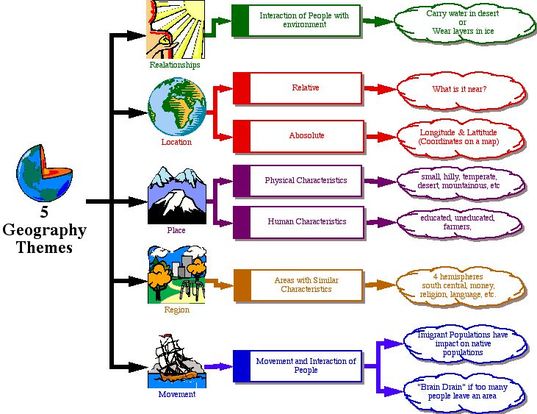
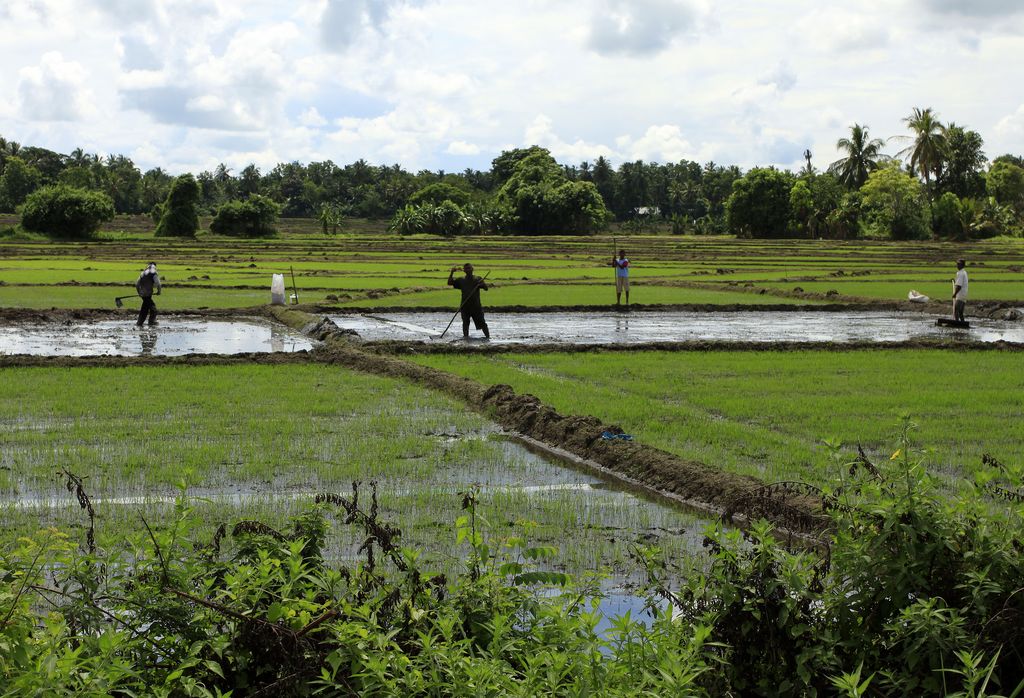
Human-Environment Interaction – The way that we have adapted to the earth has allowed us to transform the environment . In a sense, we have modified the earth to meet our own goals and needs. The human-environment interaction theme examines all how we have done and continue to do this.
Movement – As humans, we move people, goods, and ideas across the planet at will. The theme of movement examines this and is one of the most essential parts of geographical exploration. It deals with the examination of immigration, emigration, populations, and the production and distribution of products and energy sources in the countries of the world.
![Mapping change in international migration flows to global construction hotspots (demand) and migrants' countries of origin (2010 -2015) [9] Source: Global Trends: Emerging Construction Labor Markets, Build Force Canada, March 2017, page 16. Simple statistical analysis was used to the United States and India lead the way globally, each with well over a trillion dollars (USD) in planned energy and infrastructure projects. Canada, China and the United Kingdom follow, with aggregate project values upwards of $500 billion. Australia, Russia, France and Brazil round out the top countries, with projects valued at more than $250 billion. This project-based analysis is consistent with other outlooks. The Global Construction 2030 report, published by Global Construction Perspectives and Oxford Economics, projects that growth in global construction will rise by $8 trillion, growing by 85 percent to 2030. According to the report, China, the United States and India are expected to account for more than half (57%) of anticipated growth. The primary growth drivers cited by the report are population growth, demographic shifts and the related needs to build or replace power and civil infrastructure [10].](https://www.researchgate.net/profile/Aziz-Zikriyoev/publication/334442246/figure/fig5/AS:780092137549827@1562999867444/Mapping-change-in-international-migration-flows-to-global-construction-hotspots-demand.jpg)
Region – Any area on earth that is comprised of places with common characteristics is called a region. This theme of geography can be further broken down into formal regions, such metropolitan cities, districts, provinces, countries, and continents; functional regions which are usually comprised of a central point with defined boundaries; vernacular regions or places in the world that share common characteristics.

NOTES ON THE TOPIC:
FIVE TOPICS OF GEOGRAPHY NOTES
POWERPOINT PRESENTATION:
WORKSHEETS TO PRACTICE:
five-themes-of-geography-v1-quiz
VIDEOS TO REVIEW:
 Travelling across time / Viajando a través del tiempo